Sunday, 28 August 2022

Surface Design Pattern, Student Work, Spring 2022

Emma Lofland
Hand painted, stitched and beaded, cotton. 
18" x 36"


Detail


Design created digitally and then lines transferred to fabric for hand-painting.


After design is hand-painted, hand-stitching and beads are added. 
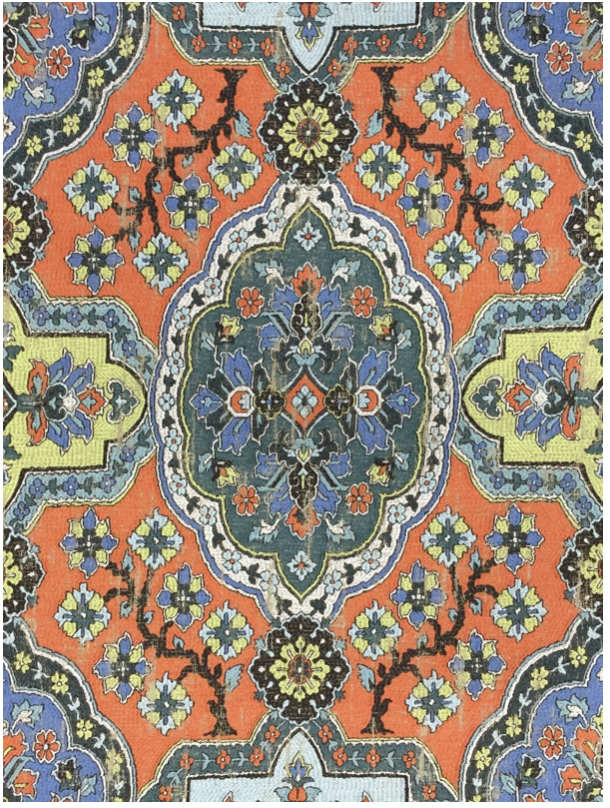


Inspiration. Turkish textile design. 


Kai Glinski
Designed on computer, digitally printed on cotton, hand stitch on digital print. 
18" x 36"


Detail. 


Digital Sketch #1

Digital Sketch #2

Digital Sketch #3

Digital Sketch #4

Inspiration #1, Floor Tile

Inspiration #2, Floor Tile

Inspiration #3, Floor Tile


Gen Glinski
Hand painted on cotton with stitched beads. 
18" x 36"


Detail of beads stitched to hand-painted surface. 


Sketches on graph paper.


Sketches on graph paper.


Final Sketch. Paint on graph paper. 


Final design transferred to fabric. 


Hannah Tremblay
Design created with Procreate and Adobe Illustrator. 
Digital print on recycled canvas. 
36" x 52"


Detail.


Carrington Boyd
Watercolor on paper, scanned, digital print on sateen. 
36" x 52"


Detail
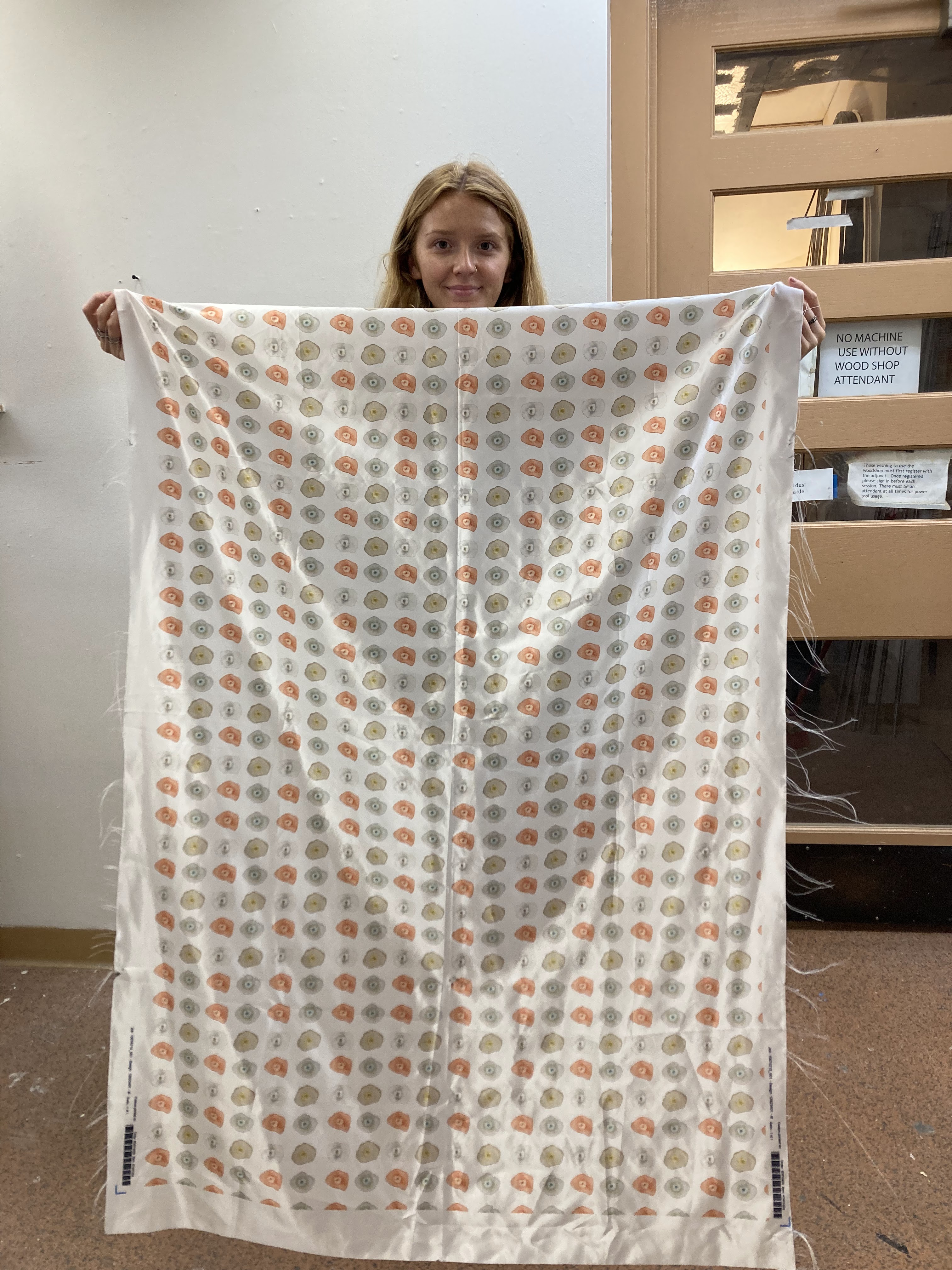


Watercolor sketches. 


Sketches are scanned into computer. 
Digital sketch #1. 

Digital Sketch #2.


Digital Sketch #3. 


Inspiration: Mold


Shauna Gentile
Crochet
18" x 36"


Detail


In-process.


Elizabeth Scott
Silk dyed with processed indigo, stamp print with silk paint. 
Inspired by Native American symbols.
36" x 36"


Detail


Lixin Wang
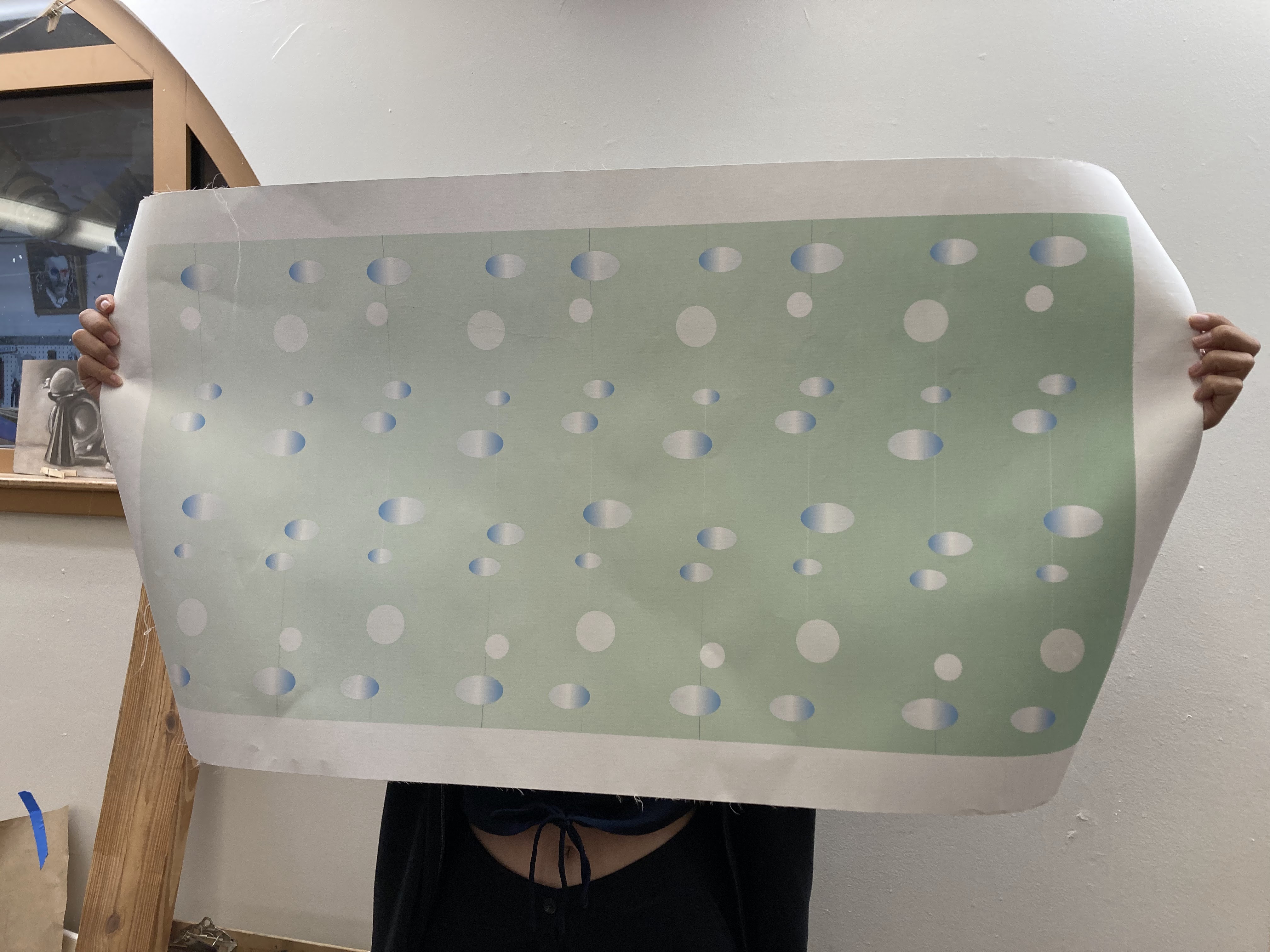
Designed on computer, printed on 100% pure silk. 
36" x 18"

Detail


I did some research on brain nerves after stumbling upon the fact that the desire to self-harm and the desire to participate in extreme sports are very similar for self-harmers. Although there is no clear evidence that there is necessarily a link between the two, a very large proportion of people believe that self-harm can raise levels of a hormone in the brain called endorphins, bringing a degree of comfort, and that exercise is bringing the same effect. I have come to the conclusion that self-harm can be an act of protection for the mind, and that in essence, there is probably no difference between what self-harmers want from self-harm and what people want from exercise.

I believe that in this age of high speed, everyone needs a space where we can hide away for a short while.

This space corresponds to a way of releasing stress, which can be various, but I would encourage people to find a way of doing so that does not put them in harm's way.

I relate the act of seeking pleasure to the silkworm's journey from spitting, to cocooning, molting, to breaking out of the cocoon. The silkworm spits out its silk threads to create a cocoon for itself in order to create a safe space for itself to grow. The silkworm chrysalis is a space where I visualize it as a space that one needs, a space for healing.



Thursday, 25 August 2022

Feedback Friday Videos from Botanical Colors


FEEDBACK FRIDAY is a bi-weekly show featuring Botanical Colors’ President Kathy Hattori and Sustainability + Communications Director Amy DuFault. Every week, Kathy and Amy speak with dyers, artists, scientists, writers and scholars about their favorite topic, natural dyeing and color.

FEEDBACK FRIDAY is now over 100 episodes strong and went live in May 2020, two months into the pandemic lockdown. Both Kathy and Amy realized there was a need to gather community in a creative space with artists worldwide scared, lonely, quarantined and unable to take a class or workshop for inspiration. The result has been overwhelming with over 10,000 people having attended a presentation at least once but many have been to more than half.

FEEDBACK FRIDAY presentations are viewed worldwide as part of college and university curriculum, natural dye and fiber organization conferences, education for global brands and independent designers and Amy and Kathy’s favorite venue, the attendees in different time zones who set their alarms to wake in the middle of the night to watch it live.

Go to link below to see archived videos. 

https://www.youtube.com/channel/UC9gJnFFzy9qYgJ_B23vjkzw


Tuesday, 18 January 2022

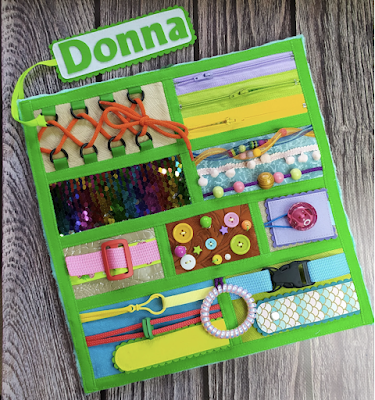
Alzheimer Activity Matt


Purpose of the Alzheimer’s Activity Mats

The activity mats are designed to safely stimulate and soothe people with Alzheimer’s and other cognitive challenges, while providing a better quality of LIFE.

L – Lift spirits and entertain users while relieving caregivers.

I – Interest  users in items on the mat. This stimulates senses and reinforces memory.

F – Focus user’s attention during therapy or conversation with a caregiver. Helps visitors and staff find topics of conversation with users.

E – Exercise hands and fingers.


See more on Etsy


This link has a pattern/guide. 


How important is touch in the care of an Alzheimer's patient?

Go to link below to read article. 


History


This is the corner of a hand sewn sail made in the 1900c. The craftsmanship and quality of the the canvas sails were made of hemp as well as clothing and ropes and the caulking used to fill gaps between planks among other things. Hemp is 3 times stronger than jute and was preferred because it was unaffected by salt water.


Little Dresses for Africa


All About Little Dresses for Africa

Founded in 2008, Little Dresses for Africa is a not for profit charity that strives to send beautiful clothes for vulnerable children across Africa.

The charity was founded in the US, but we work with the wonderful Sarah who is the charities UK ambassador. She's lovely and once your little dresses arrive here with us, we send them on to her and she works to make sure they're sent to worthy communities across Africa.

The pillowcase dresses are hugely appreciated by the communities as items of clothing, however the charity works closely with the communities too. All the dresses are delivered to small and remote villages by groups of volunteers. The charity delivers the dresses to the children and spend time with the residents, building relationships to focus on educating about clean water, assisting with primary education and helping to build community.

The little dresses are always delivered to small villages and distributed alongside a local church or orphanage. The charity always ensures that the villages that are receiving dresses do not have easy access to clothing items, therefore do not negatively affect the local economy or compete will a local business.

You can keep updated with where our little dresses are being sent by following the Little Dresses for Africa - UK facebook page.


How To Get Involved

The Little Dresses charity works entirely on donations of homemade dresses.

We send you beautiful new pillowcases, so we want to encourage you to do something really great with your old ones. All you need is a sewing machine and a spare afternoon, the instructions are made to be simple so whether you're a sewing expert or a complete newbie, everyone can get involved.

Find our instructions for how to make your own dress from a pillowcase here.

Want some inspiration? See our gallery with a selection of some of the 2000 dresses we've been sent so far!

Share your own photos with us on social media too, always tagging in #mylittleslsdress.

Images and info above sourced from Secret Linen Store


Marit Ilison, Designer


The eye-catching, colourful and patterned woollen vintage blankets originate from the 1970s and 1980s Soviet Union when they were very common and found in every house. Every family had at least one, if not several. The blankets are often connected to very personal memories, for example, they were given as wedding presents. In the beginning, the blankets were made of camel wool. People used to unpick them to get precious yarn and to knit sweaters of it during the Soviet deficit. Later mainly lambswool was used. We dedicate a lot of time finding them because such blankets have become rare in time and each of them is unique. For Longing for Sleep Unique collection coats each blanket is carefully selected and cleaned.


More to see. 


Suzani


What is a suzani?

A suzani is a large, hand-embroidered textile panel; the word comes from the Persian word suzan, which means needle. Originating from nomadic tribes in Tajikistan, Uzbekistan, Kazakhstan and other Central Asian countries, suzanis have become highly collectable and valued for their beautiful decoration and fine craftsmanship.


How was the suzani originally used?

The primary use of a suzani was within the yurt (a Central Asian nomadic tent), as a protective wrapping panel for textiles and belongings. They were also used as prayer mats, as bed sheets and for seating — pieces of furniture are seldom found in yurts, because they are cumbersome to move.

Suzanis had a symbolic significance, too. They were traditionally made by brides and their mothers as part of a dowry, and presented to the groom on his wedding day. They represented the binding together of two families, and were adorned with symbols of luck, health, long life and fertility.


                        PROBABLY BUKHARA, UZBEKISTAN, 19TH CENTURY


How are suzanis made?

Suzanis are made from cotton, sometimes silk. The pattern is first drawn onto the cotton, before being embroidered on narrow portable looms. They are usually produced in two or more pieces, meaning that they can be worked on by more than one person, before being stitched together.

Just four stitches — tambour, basma, chain and kanda-khayol — are used to realise a large variety of patterns, which traditionally include the sun and moon, flowers and creepers of the Asian steppes, leaves and vines, fruits (especially pomegranates), and occasionally fish and birds. These motifs were believed to imbue the suzanis with spiritual powers, offering protection or strength to their owners.

Which dyes are used?

Suzanis are coloured with vegetal dyes, although some more recent pieces may use synthetic dyes, which are not considered to give the same intensity of hue.

The natural dyes use imported indigo for blue, cochineal and imported madder for reds, saffron for yellow, a mix of indigo and a yellow tree fungus for green, and iron oxide and pistachio nuts for black. The dyeing process takes place in an outdoor vat, similar to those that can still be seen across the Maghreb.


 More images and info. Go to source link below.

https://www.christies.com/features/A-guide-to-suzani-textiles-8341-1.aspx


Uzbekistan is a Central Asian nation and former Soviet republic. It's known for its mosques, mausoleums and other sites linked to the Silk Road, the ancient trade route between China and the Mediterranean. 


ESO STUDIO SHOP


More to see on the website. Link below. 


And check out this great blog post. 


Friday, 7 January 2022

Kitchen Garden Textiles


"I design textiles to replace single-use and plastic disposables in home kitchens and rental napkins for caterers and restaurants, and I give back to urban farmers. All of the textiles I use began as crops, just like the food on our table."
-Heidi Barr, Founder 

Go to website to learn more. Link below. 


Student Blogs, Spring 2025

  Clare Cassidy Rhys Conner Gem Hansen Hayley Harris Julia Hewitt Sophia Johnston Laurel Koschal Owen Lindsey Colin Locatell Alaina Medina E...