Friday, 14 October 2022

Anne Wilson, Artist, American


LOST is about the loss of the physical body; about mortality. The displaced hair is lost, separated from the body, graduated over a large cloth that may reference something like a garment or a curtain, gathered and draped over a chair.


More to see. 
Artist Website:

Luisa Rabbia, Artist, Italy


https://luisarabbia.com/work/


"Though Luisa Rabbia works in various media, the core of her practice resides in drawing." - source is The Brooklyn Rail, article by Stephanie Buhmann. Link here to read.


Tuesday, 11 October 2022

Sarah Mead Leonard, "Morris's Imperial and Environmental Materials: A Study in Indigo"


Dr. Sarah Mead Leonard presents her paper "Morris's Imperial & Environmental Materials: A Study in Indigo," discussing the indigo used to create Morris's textiles. A question and answer session follows. Originally presented on Zoom for William Morris Society US members and registered guests on William Morris's 187th birthday, March 24, 2021. Please note the video is fully captioned.

Sunday, 2 October 2022

Warner Textile Archive, United Kingdom


A few examples. More to see. Go to link below. 


Textile Society Databases


The Textile Society promotes the study of textile disciplines and celebrates the history and culture of textiles, both traditional and contemporary.

17 databases available. 
Go to this link: 


Screen shot example from wool database.


This is called an andari, and its Muslim from Banni Cutch. [MHT] And it is what? [JG] It goes on a horse's head – like that. The holes are for the ears. [MHT] What, for festivals? [JG] For festivals.'

Image and text source link. More images and information.


Surface Design Association Blog


Link below for updated/current blog posts:


Below - screen shot from blog.

“Exposing History: Color, Taste, and Textiles” by Nikki Fragala Barnes: “Mongiovi rejoices in complexities and constraints, especially when the tensions of a site-sensitive project generate insight and restoration of the presences—the fibers—of people and their technologies… Mongiovi is in conversation with structures and spaces as her work responds to centuries of domestic living.”


George Washington University, Textile Museum, Database

GW is home to nearly 31,000 works of art and artifacts, including extensive textile collections. More than 16,000 works are currently available online, and new records are added weekly.

Link below to search the collection:


A few screen shots from the collection:


Blog for Textile Research Center, Leiden, Netherlands


Link to above images: https://www.trc-leiden.nl/trc/index.php/en/blog


Link to main/updated page of blog: https://www.trc-leiden.nl/trc/index.php/en/blog


Sunday, 18 September 2022

Textile Research Centre, Leiden, Netherlands

The collection of the Textile Research Centre, Leiden, contains over 39,000 textiles, garments and accessories such as headgear, footwear, jewellery and walking sticks. It also includes technical items such as hand spinning and weaving equipment. The objects derive from all over world and date from some seven thousand years ago to the present day. The collection was started in 1997 and since then has grown rapidly.


The collection can be searched in a number of different ways, for example, by country, date, technique, as well as by subject category, such as hats, shoes, belts, and so forth.

All of the items in the TRC Collection are now on line, but as with many collections, not every item has (yet) a detailed description and photograph. Every week new information is added to the database by a team of dedicated colleagues.

Go to link below to search the database:


Screen shot of artifact from collection. 


Sunday, 28 August 2022

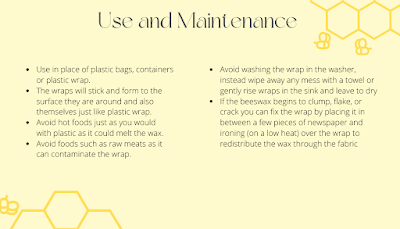
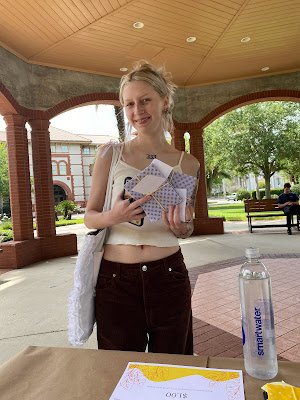
Emma Lofland, Beeswax Wraps, Student Work


Reflection Statement:
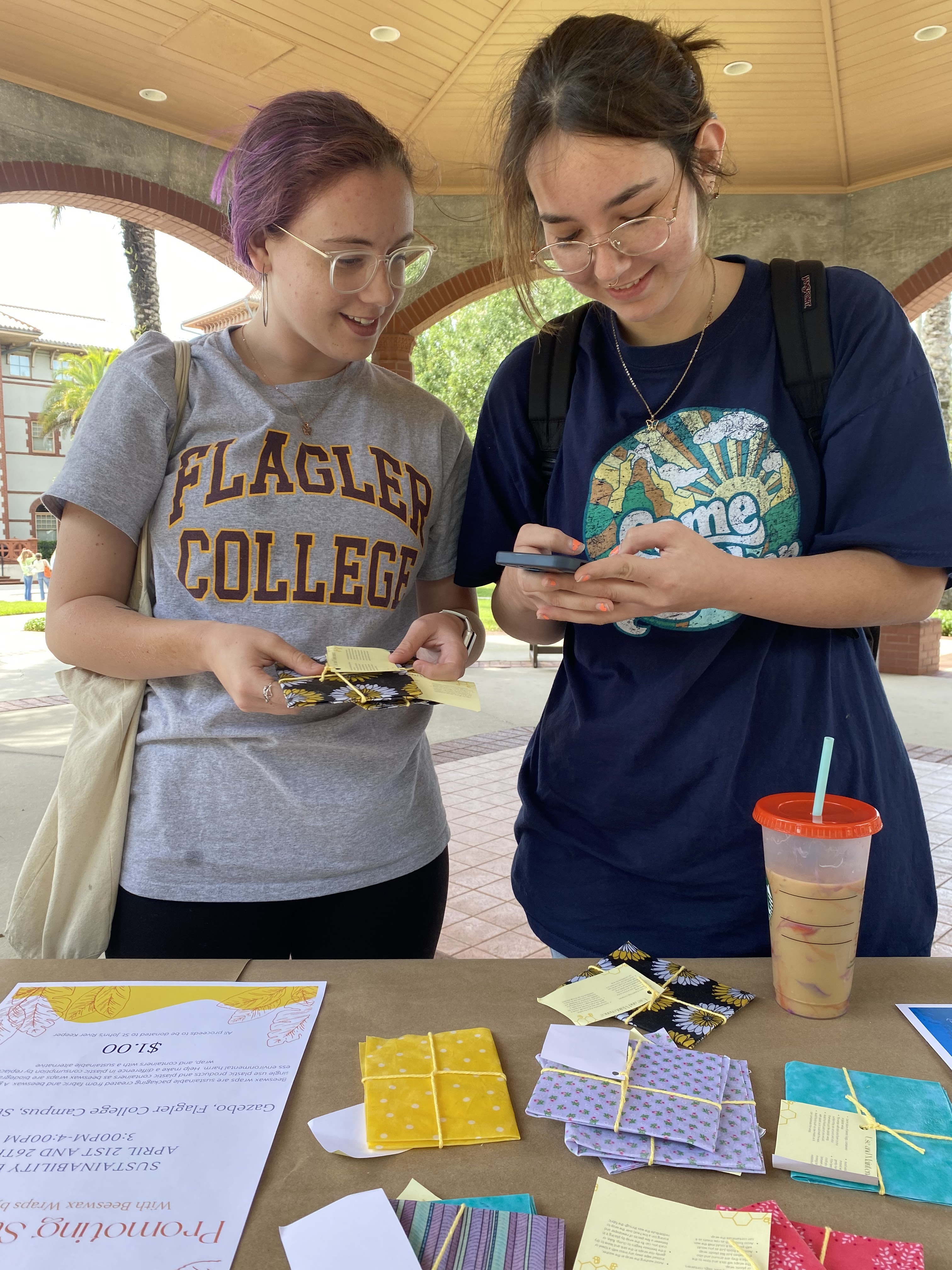
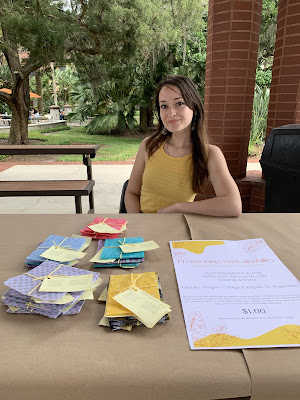
This project was created when I noticed a serious single-use plastic problem on my campus. I decided to look into sustainable alternatives to plastics and found beeswax wraps that are reusable, biodegradable, and more environmentally friendly in their creation. To raise awareness of sustainable packaging and encourage its use, this project was turned into a tabling event to sell the beeswax wraps. Creating a promoted, multi-artist event helped to successfully draw in people who were curious about the products and raised awareness of these sustainable alternatives. I donated all proceeds from the sale to St. Johns Riverkeeper.

Overall, the table event was successful. People were curious about the products and were interested in hearing how they impacted sustainable efforts. One thing that could be done differently is choosing a variety of days and times to display the products. The second day was less successful due to the same crowd of students passing through, most of which had already looked at the products. Also more promotion of the event, actual posters being put around campus instead of just a social media post could be a better reminder of the event occurring.


A few images from Emma's process:


  42 wax-covered fabric squares

Cora Blades, Upcycled Denim, Student Work


Upcycled Denim


                                                              The Process

Step 1: Learn how to thread and use the sewing machine.


Step 2: Detach one leg from the jeans and plan out your design.


Step 3: Cut out all of your shapes and decide on your pattern.


Step 4: Sew each individual shape to the leg 
and when complete sew the seam of the leg back together.


Student Blogs, Spring 2025

  Clare Cassidy Rhys Conner Gem Hansen Hayley Harris Julia Hewitt Sophia Johnston Laurel Koschal Owen Lindsey Colin Locatell Alaina Medina E...